Reflect, Review, Recalibrate
 Nancy
Nancy 
"Without reflection, we go blindly on our way, creating more unintended consequences, and failing to achieve anything useful."
- Margaret J. Wheatley
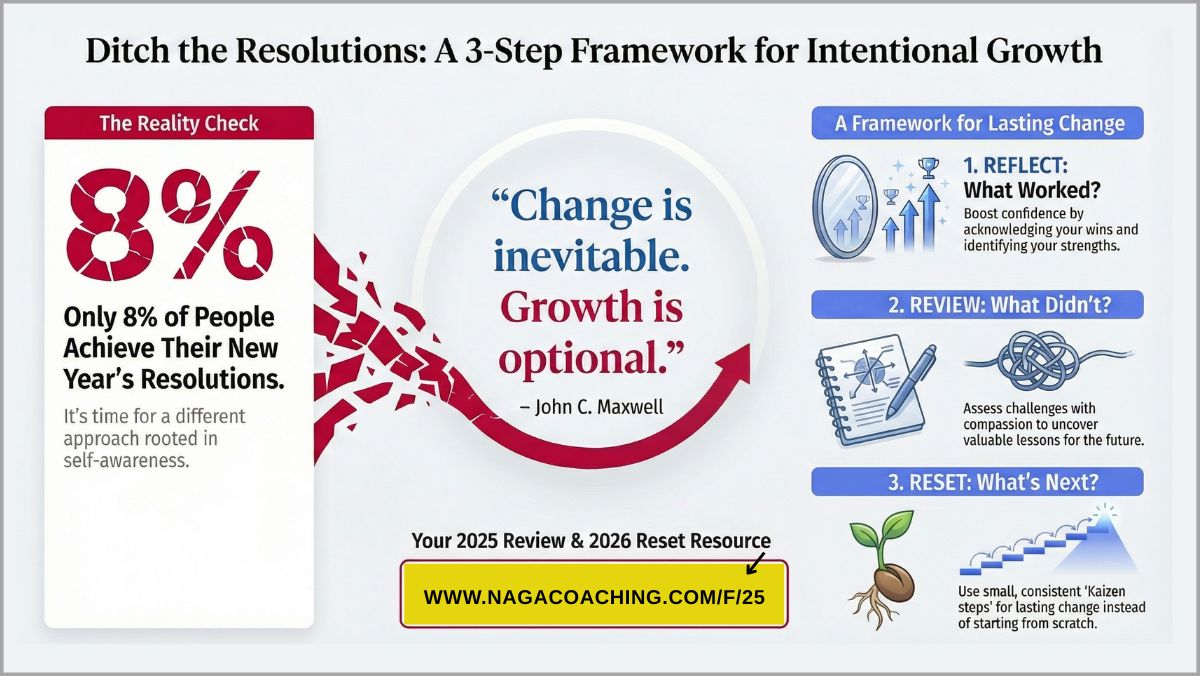
According to a *study published in the Journal of Clinical Psychology, only about 8% of people actually achieve their New Year's resolutions. The study analyzed data for several years and surveyed many participants. It found that while many people set resolutions with good intentions, the majority struggle to maintain their commitment over time.
*Source: Norcross, J. C., Mrykalo, M. S., & Blagys, M. D. (2002). Auld lang syne: Success predictors, change processes, and self-reported outcomes of New Year's resolvers and nonresolvers. Journal of Clinical Psychology, 58(4), 397–405.
The year is only two weeks old, and many of us are still feeling motivated and optimistic, chomping at the bit to keep our resolutions. While some of us have already slid back into the status quo. Opps! Did reading that sentence make you feel uncomfortable? Before you click away, there's good news. So read on and discover why resolutions fail us, and some simple ideas for making your change go beyond the first few days or months of a New Year.
"Past and present I know well; each is a friend and sometimes an enemy to me. But it is the quiet, beckoning future, an absolute stranger, with whom I have fallen madly in love." - Richelle E. Goodrich
As a lifelong learner, one of the things I love geeking out on is neuroplasticity and the faith-mind-body connection. So, apparently, because our brains are designed to conserve energy and operate efficiently, anything unfamiliar, especially a significant change, is initially perceived as a "danger" or threat at the nervous system level. Change demands cognitive effort, which the brain may resist as a self-protective mechanism.
So, while we consciously say we want to do things differently (New Year's Resolutions), subconsciously, by default, an opposing program runs. This explains why we may desire to expand our comfort zones yet feel confused and frustrated by our seeming lack of progress. Can you relate? I can.
Turns out, when we do things that disrupt our familiar habits and established routines, the perceived loss can outweigh the anticipated benefits. Hello, (subconscious) hesitation to embrace change. Then there's the cognitive dissonance, the mental discomfort we experience when we hold two conflicting beliefs.
"For as he thinks within himself, so is he." - Proverbs 23:7
That's why compassionate self-awareness helps. Instead of shaming ourselves into change, when we curiously question the insecurity, unpredictability, and internal conflict long enough, we help our brain cooperate. As we reframe the narrative, mind renewal creates new thought ladders, and we form new beliefs that align with our actions.
Just wanting to change sometimes isn't enough. But a compelling vision is a strong intrinsic reason to overcome initial resistance. Vision precedes a shift in mindset, thought patterns, and behaviors. We take action steps that lead to sustainable change, driven by internal inspiration.
This is an ongoing personal growth process. Not a spontaneous declaration amid joyful, inebriated New Year's celebrations.
The Power of Embracing Self-Awareness for Growth
As the year unfolds, if at any time you identify with the 92%, that's not your fault. And this isn’t a mark against you; it's a common humanity struggle many of us face when trying to create change.
And this is where self-awareness becomes key.
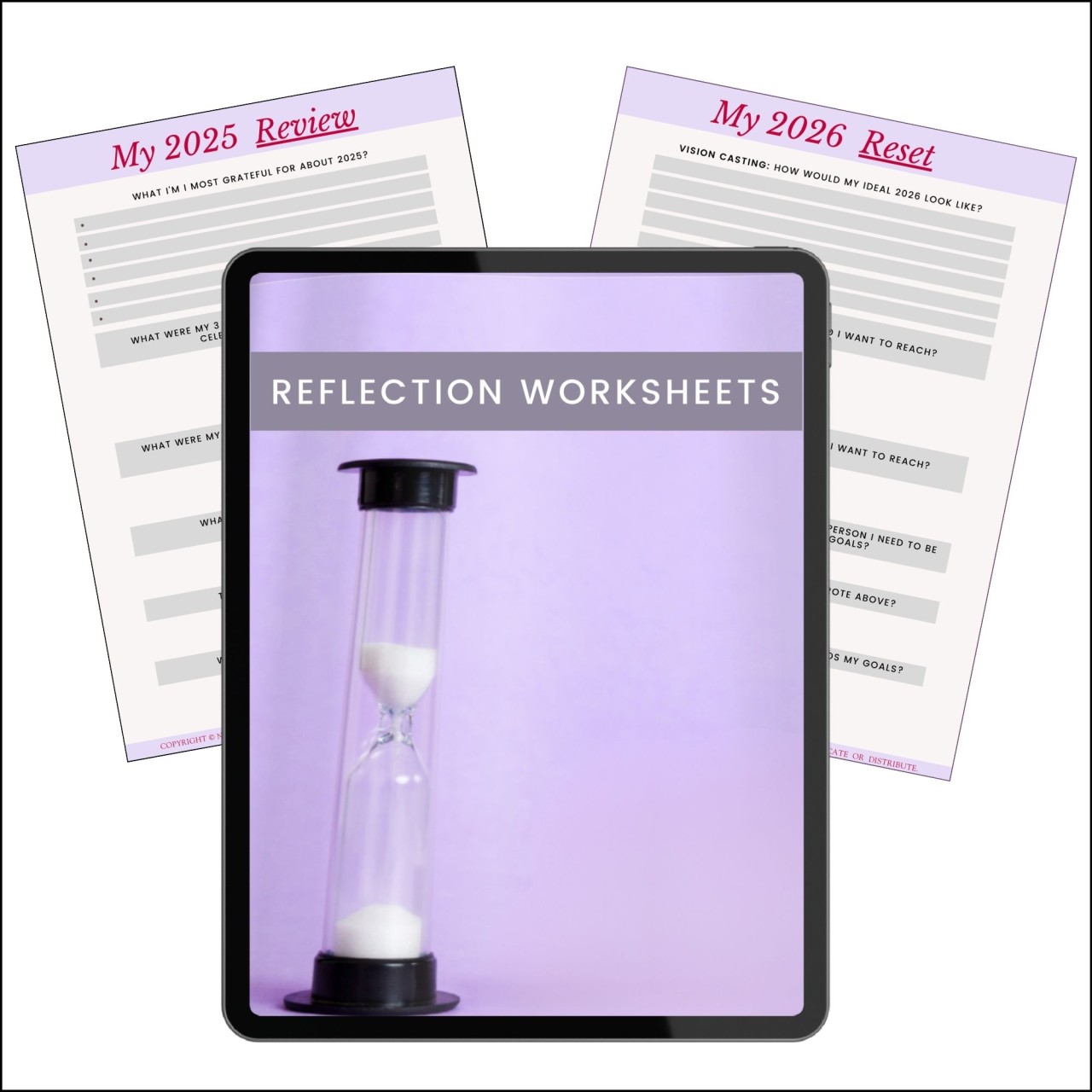
It allows us to take a step back and reflect on our choices. Self-awareness is about understanding where we're coming from and where we want to go professionally and personally. Over the years, I've found that addressing 3 simple questions: What worked, what didn't, and what's next can help us design a different approach moving forward. That's why I created a complimentary 2025 Review & 2026 Reset Resource to make this easy.
Reflect on Progress: What Worked?
Taking the time to assess your achievements boosts confidence and highlights your strengths. Reflection is like holding up a mirror; it reveals the positive things we overlook because of our tendency toward negativity bias. This resource has prompts and frameworks to acknowledge and celebrate your wins. Identifying areas for improvement will feel better when built on wins.
Review for Clarity: What Didn't?
Reviewing our challenges reinforces awareness and sets the stage for honest accountability, with compassion and kindness. Not critical harshness. Growth isn't about beating ourselves into change, and a review isn’t a postmortem. In my signature G.O.A.L.S. System, L stands for Learn and Grow. Failure is feedback, so instead of feeling bad about what didn't work, consider it a step forward towards your big-picture vision. What didn't go as you desired? And most importantly, what lessons did you learn? These insights are a solid foundation for the next growth step.
Recalibrate with Intent: What's Next?
After reflecting and reviewing, it’s time to look ahead. I think the whole 'New Year, New Me' thing is not wisdom. Why discard all the valuable experiences from years past? We don't have to start from scratch. Instead, recalibrating is an opportunity to align your intentions with your values, strengths, wins, and lessons learned. Create a compelling vision, then set inspiring, kaizen goals you can stick with beyond the initial January excitement.
Then consider small, consistent micro kaizen steps because they compound and lead to change and sustainable growth.
As John C. Maxwell said, "Change is inevitable. Growth is optional." Reflecting, reviewing, and recalibrating are some ways we choose growth.
The path won’t always be easy, but that's what personal development is about. It's about adapting. And, based on personal experience, I'm convinced that integrating well-being is key to building the capacity to navigate the discomfort of change.
Instead of another fleeting resolution, why not embrace reflection and a compelling vision to make the new year different and better?
As always, feel free to share your thoughts below, and best wishes in 2026.
Happy Reflecting!
Recommended Resource
Is this a good time to explore sustainable change that benefits you or your team?
To discover how I can support you, CLICK HERE.